Loyalty points are a form of currency specific to the business. Customers earn points when they make a purchase and redeem them for discounts or products. For the restaurant, they serve two purposes: they give customers a reason to return and, above all, they’re the only way to know who’s walking through the door.
What Are They Really For?
The real answer is that they’re meant to keep customers coming back!
These days, without a loyalty program, your customers are anonymous. You know you sold forty meals on Thursday, but you don’t know if they were forty different people or twenty people who came twice. You don’t know who used to come every week and hasn’t shown up in two months. You can’t notify anyone of anything.
A rewards program is the key to driving sales. Build customer loyalty, and from there, you can do everything else, such as personalized marketing.
How They Work, Inside and Out
How much do you earn? The standard practice is to award points per euro spent. Points can also be awarded per visit—which rewards frequency rather than the amount spent—or for a specific product when you want to promote something.
How much is a point worth? This is the real financial decision, because it determines how much the program costs you. It’s always expressed as a percentage of sales: if you give one point per euro and 100 points are worth five euros, you’re giving back 5%.
What can be redeemed. An immediate discount, a specific product, or access to something you can’t buy. The third option is usually cheaper and more appealing.
From there, the tiers come into play: customers who, based on volume or frequency, move up to a category with better terms. You don’t need them to get started, and they work very well starting in the first year, once you have a customer base.
What it looks like
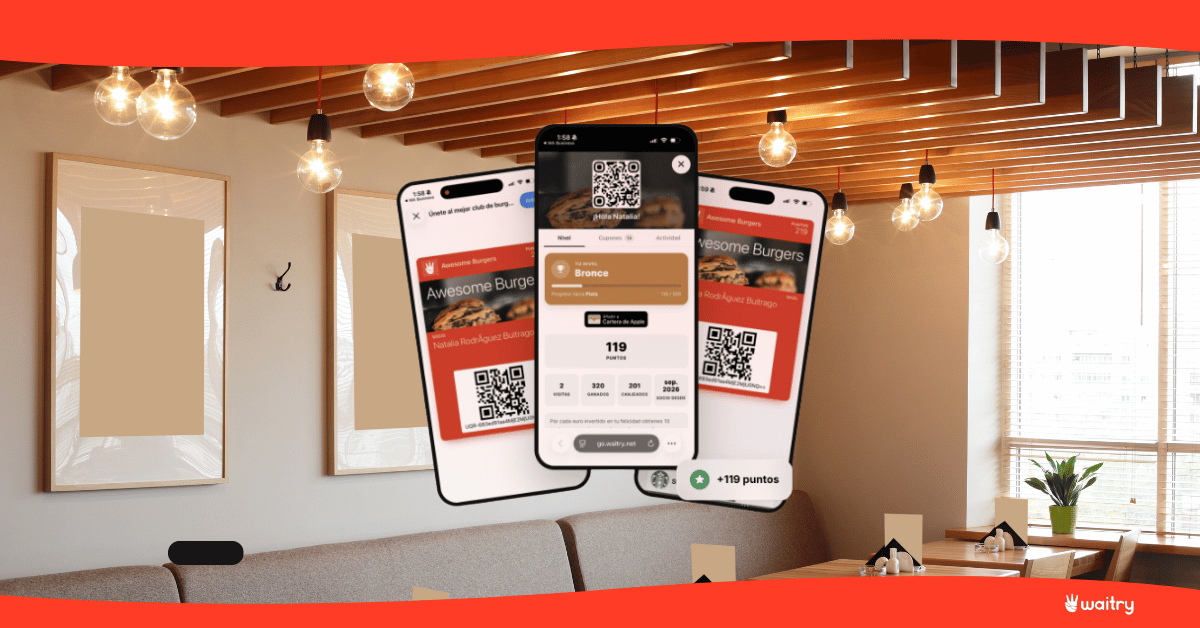
The customer’s screen showing their balance and level, and the dashboard displaying members, points in circulation, and redemptions.
On the customer’s side, there’s a card showing their balance, their level, and what they can redeem. On your side, there’s a list of people with their names, how much they spend, and when they last visited.
That second screen is what makes the difference. The first one is just the gateway.
Where do people sign up?
If signing up requires filling out a long form at home, no one will sign up. The sign-up process has to take place where the customer already is and at the moment they’re already there:
- At the newsstand, while he’s putting together the order.
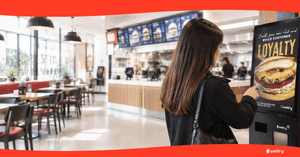
- On the POS terminal, on the screen you see while you’re paying.
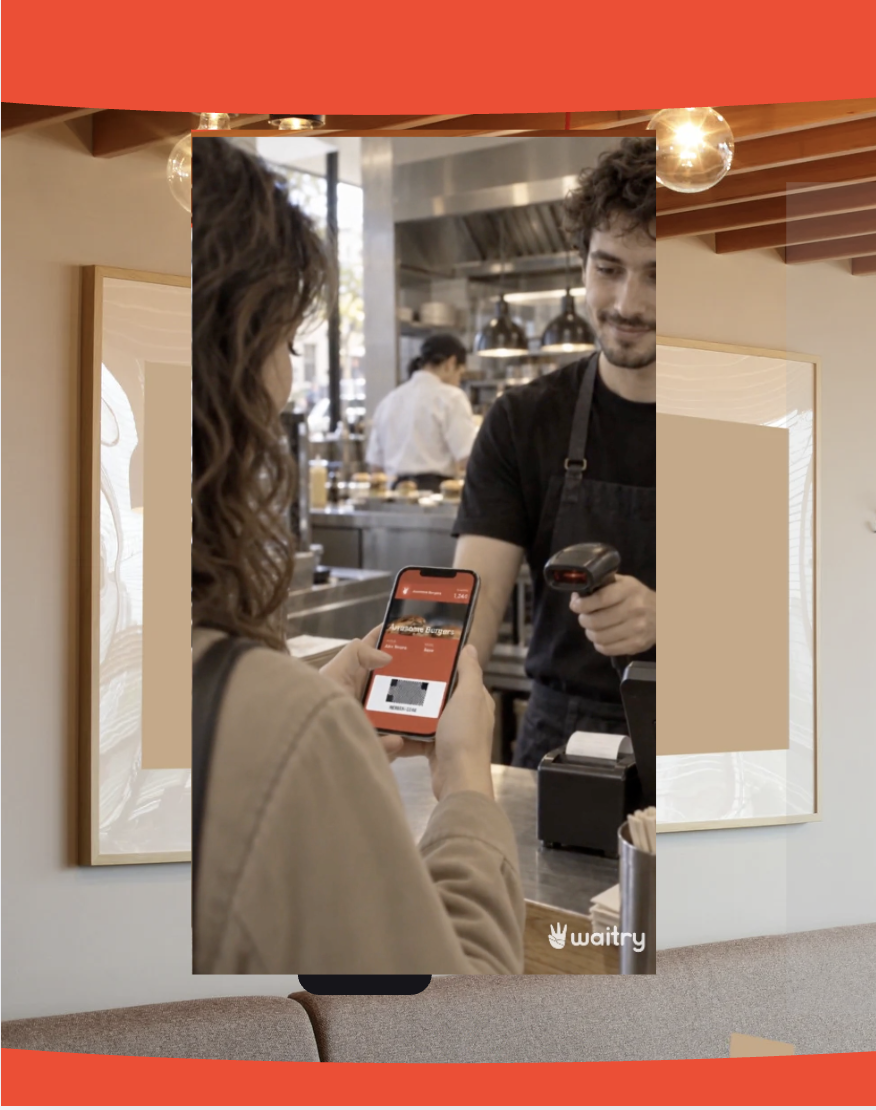
- On the QR code, with your phone already in hand.
- On the website, for those who order for delivery.
The less information you ask for, the better. An email address or a phone number is enough to get started; the rest can be asked later, once a relationship has been established.
What Is Measured
A program without numbers is just an expensive stamp card. These are the ones that matter:
| What | What does it tell you? |
|---|---|
| Average ticket price for members versus non-members | Is the program actually making a difference, or is it just giving things away? |
| Points in Circulation | What you owe. It’s a liability, even if it doesn’t seem like one. |
| Canjes | If the reward is appealing. Few redemptions don’t mean savings—they mean a lack of interest. |
| Sign-ups by channel | Where do real people sign up to help strengthen that site? |
| Customers Who Are Drifting Away | Those who used to come but have stopped coming. It’s the most profitable list you’ll ever have. |
That’s how Waitry does it
Waitry’s rewards program is set up through the dashboard, and sign-up is available in four places: the kiosk, the app, the website, and the POS screen facing the customer. The tiers are configured with their own conditions.
The reports show the increase in average spend per member, the number of points in circulation, and redemptions, and the promotions engine allows you to launch offers targeted only at a specific level or a saved segment, with the ability to track what has been redeemed and when.
A legal matter that’s best to take care of
A rewards program is, by definition, a customer database. The moment you save an email address or a phone number to identify someone, you are processing personal data, and there are rules governing that.
It’s not complicated and only needs to be done once: clearly state what you’ll use that data for, request separate consent if you also want to send marketing communications, and make it easy for users to opt out and request that their data be deleted. The relevant authority in Spain is the Spanish Data Protection Agency, and loyalty cards frequently come up in its rulings precisely for this reason.
It’s worth setting everything up properly on the first day. Having to redo the sign-up process once you already have three thousand members signed up is much more of a hassle.
The Same Old Mistakes
Make the reward unattainable. If it takes fifteen visits to achieve something, the customer figures that out on the first day and leaves. The first reward has to come quickly—even if it’s small—because that’s what shows the system works.
Set it up and never use it. A program that just tracks points is nothing more than an expensive database. The value lies in what you do with it: notifying customers who haven’t been in for two months, rewarding those who come every week, and testing a new dish with your highest-spending customers before adding it to the menu.
When Is It Worth It?
It’s worth it when you have repeat customers—a neighborhood restaurant, a coffee shop, or a chain with a local clientele. If your business relies on tourists who only stop by once, the program won’t do much for you.
And it pays off more the higher the purchase amount or the more frequent the purchases, because the cost per point is spread out.
What it doesn’t do is improve the experience. No one goes back to a place where the food is just okay just because it has points. The program encourages repeat visits from those who already have reasons to return; it doesn’t create those reasons.
Frequent questions
How much should a point be worth?
You decide what percentage of the sale you’re willing to refund. Most restaurants and bars operate within a range of 2% to 5%.
Which is better: points per euro or per visit?
“Per euro” rewards spending, while “per visit” rewards frequency. If what you need is for people to come back more often, “per visit” works better.
Do the points expire?
They can expire, and it’s a good idea to let people know, because points in circulation are money you owe. If you let them expire, make sure to give clear notice well in advance.
Do you need an app to have a rewards program?
No. It can be accessed via the QR code, the kiosk, and the POS terminal, and the card can be stored on the customer’s phone without installing anything.
How can I avoid giving away profit margin?
Look at two figures: the percentage of refunds and the average receipt amount for members versus non-members. If the latter doesn’t go up, the program is costing money without providing any benefit.
Can we run a promotion just for members?
Yes, and that’s what works best. It can also be limited to a specific level or to a group of customers who meet a certain criterion.
How long does it take to notice a difference?
New customers start coming in as early as the first week. The effect on repeat business takes a couple of visit cycles—which in the hospitality industry are usually two or three months.