Published on September 3, 2026
The summer of 2026 ends with an uncomfortable paradox: more customers have come in, but they’ve spent less. Two out of three restaurant and hospitality business owners report a drop in average spending per customer; several tourist destinations are closing the year with revenue below 2025 levels; and, at the same time, the sector is setting a new all-time high for employment. There is only one practical conclusion: in September, margins won’t be maintained by filling more seats; they’ll be maintained by raising the average check and lowering the cost of each service.
In short: The summer of 2026 was good in terms of foot traffic but bad in terms of revenue. 66.7% of hospitality business owners surveyed in Cartagena reported a drop in average spending per customer, and 75% reported lower revenue than in 2025. Valencia estimated a decline of −5.1%. At the same time, July 2026 set an all-time record for tourism employment with 3,093,702 registered workers. With prices already at their peak, there are three strategies left: suggest add-ons with every order, shorten the time between seating and ordering, and organize the menu by profit margin.
What the Numbers Say
It wasn’t a bad summer in terms of attendance. It was a bad summer in terms of revenue. That distinction matters, because each situation is handled differently.
| Indicator | How did it close? | What does this mean in practice? |
|---|---|---|
| Average spending per customer | 66.7% of restaurant and bar owners surveyed by the Cartagena association report a widespread decline | The customer comes in, sits down, and orders less. The problem is at the table, not at the door. |
| Summer Billing | The Hospitality Coordinating Committee for the neighborhoods of Valencia estimated a decline of 5.1% compared to 2025; in Cartagena, 75% of the businesses surveyed reported lower revenue | Lower revenue with the same cost structure: the margin absorbs the difference |
| Profitability | The restaurant industry faces a series of margin declines amid rising costs and increased regulation | Raising prices is no longer an option: we’ve hit the ceiling |
| Jobs | 3,093,702 workers in the tourism sector in July 2026—an all-time high and 13.9% of the total number of workers nationwide | There are more payrolls than ever, and there’s still a shortage of staff for the Saturday shift |
The season recap, plain and simple: more customers, lower average check, higher costs, and the same tight-knit team.
Why Has Average Spending in the Hospitality Industry Declined?
Three factors have come together that are beyond the restaurateur’s control. The loss of purchasing power, with prices rising faster than wages. The cost of vacation rentals, which is eating into a portion of the budget that used to be spent on meals. And consumers who have started dining out again but are keeping a close eye on their spending: they order a second dish to share, skip dessert, and opt for coffee after dinner.
What does depend on the restaurant staff is the fourth point: how many times the customer is asked if they’d like anything else, and at what point. When the dining room is just the right size, that question never comes up. The server is taking the order at table seven, not offering dessert at table three. It’s not a problem with the staff’s attitude—it’s a problem of having enough hands available during peak hours.
What’s Changing in September
September isn’t just a continuation of August. It’s a different venture with the same cuisine:
- The daily noon broadcast is back. The daily special is regaining popularity, and with it comes a lower and more predictable check. All the profit margin comes from drinks, dessert, and coffee.
- The mattress on the terrace is running out. Fewer staff per shift and greater reliance on internal staff rotation.
- The insoles are repositioned. The seasonal reinforcements leave, and the core team stays behind to cover the same workload with fewer people.
- That’s when the final quarter is decided. Measures implemented in September will be in place in time for the Christmas rush. Those implemented in November will not.
The three levers that remain
If you can’t raise the price any further and the volume isn’t up to you, that leaves three.
1. Always make suggestions—not just when you can
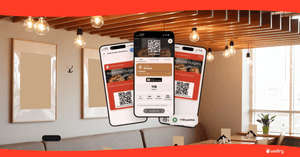
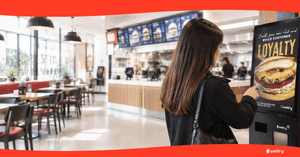
The suggestion made on 100% of orders—rather than the 30% that the server has time for—is what sets one receipt apart from another. This is where digital ordering and self-ordering really come into their own: they don’t replace anyone; they ask the question that goes unasked during peak hours.
→ Self-service kiosks: How they work
2. Cut down on the wait time between sitting down and ordering
Every minute a table is occupied without an order being placed is a lost opportunity for turnover. In a two-shift service, five minutes per table equals one full table.
3. Sort the list by margin
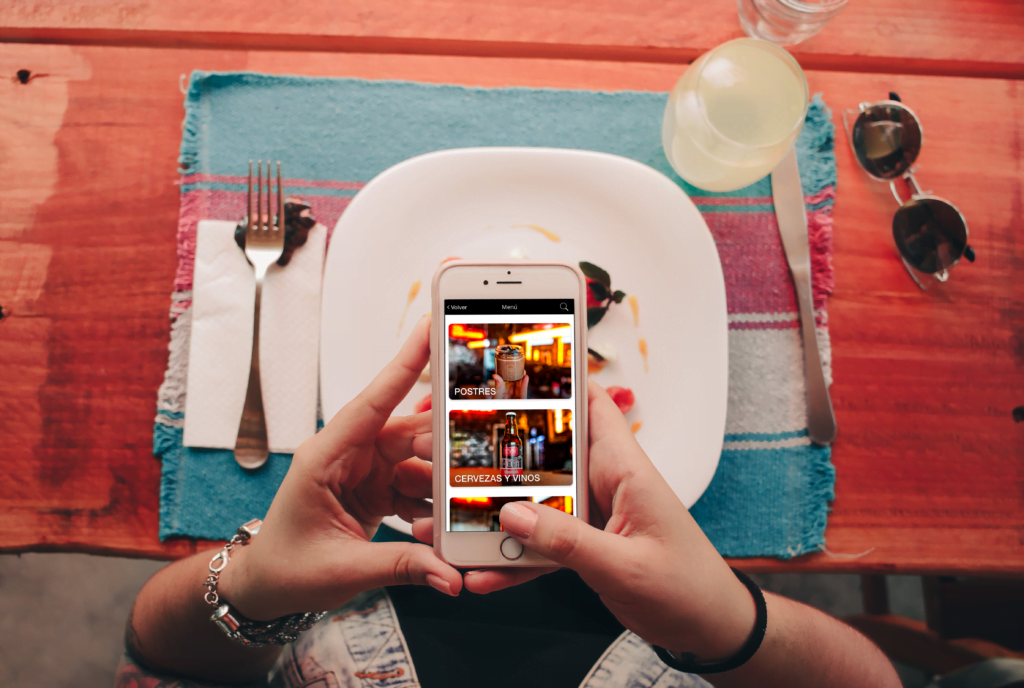
What goes at the top, what includes a photo, and what disappears. It’s free, and it’s the first thing you should try.
→ Digital letter: Put it together in 5 minutes
What none of the three solves
It’s worth noting: none of this makes up for a problem with the concept, location, or product. If the restaurant isn’t filling up, technology won’t fill it up—all it does is extract more from each customer who already walks in. And if the restaurant offers high-end table service, with a high average check and a limited menu, the increase in the average check from automatic suggestions is much smaller than at fast-food or casual-dining establishments. To claim otherwise would be a lie.
Frequent questions
Has it been a bad summer for the hospitality industry in Spain?
It has been a summer with normal foot traffic but lower revenue. In a survey conducted by the Cartagena Hospitality Association, 66.7% of businesses reported a decline in average spending per customer, and 75% reported lower revenue than during the 2025 season, despite having more visitors. In Valencia, the Neighborhood Hospitality Coordinating Committee estimated a 5.1% drop in revenue compared to the previous summer.
How many people are currently employed in the Spanish hospitality industry?
In July 2026, the tourism sector reached 3,093,702 Social Security enrollees, the highest figure on record and 13.9% of all national enrollments. In that month alone, the hospitality industry added 70,409 enrollees. The sector has more jobs than ever before, and yet there are still unfilled positions.
How can I increase the average ticket price without raising prices?
Ensure that recommendations are always made—combo meals, portion sizes, dessert, and coffee—by organizing the menu by margin and reducing the time between when a customer sits down and places an order. All three of these measures have no or very low cost.
Do I have to replace my POS terminal to process the order digitally?
No. QR ordering, self-ordering, and the kiosk are set up as an overlay on top of the POS system you already have. Waitry integrates with more than 40 systems, including Revo, Ágora, ICG (Hiopos), Hosteltáctil, Oracle Symphony, Sinqro, and Deliverect. Switching POS systems in September, with the equipment just re-installed, is exactly what you shouldn’t do.
→ See all available integrations
Start with something that doesn’t cost anything
If you take away just one thing from all of the above, let it be this: the average check is what matters at the table, not on the price list.
You can set up your digital menu and start trying it out today—without changing your POS system or having to talk to anyone.
Would you rather see it with your own numbers? Request a demo, and we’ll calculate it based on your average ticket and actual volume.